
What Is Your
Shit Worth?
You've been pitched before. Ethanol. Solar leases. Wind turbines. You smiled, you nodded, and you waited for them to leave. You were right to be skeptical, you are right to be skeptical now. We would expect nothing less. Read on.
Call now: 250-217-6798
Your Cows Make Methane.
That Methane Is Worth Money.
Your cows produce manure. That manure releases methane. Under Canada's Clean Fuel Regulations, oil companies are legally required to reduce the carbon intensity of their fuel. The most cost-effective way for them to do that is to buy credits from companies that capture methane. ACC puts a digester on your farm that captures that methane. ACC owns the equipment, handles all the paperwork, sells the credits, and sends you a cheque. You provide the land and the manure. You never pay for the equipment. You never touch a government form. ACC pays you every year the digester operates.
Revenue Calculator
Let's Get in the Ballpark
See if your farm would qualify — tell us a bit about your operation.
Straight Up, This Is the Ballpark for a Farm Like Yours
Steady-state annual estimate (Year 3+). Year 1 is approximately half this during biology ramp-up.
Here is what you will get from ACC:
Assumptions behind this estimate
Credits are calculated using the CFR CI pathway: (baseline CI − project CI) × energy produced. Default project CI of −50 gCO₂e/MJ will be updated with GHGenius modelling for each farm. RNG priced at $20/GJ (upgraded pipeline-quality gas under renewable content mandates). Credit prices: $350/tonne in BC (combined federal CFR + provincial LCFS), $250/tonne in other provinces (federal CFR only). Avoided costs (heating, bedding, fertiliser) are farm-specific estimates. Year 3+ steady-state shown; Year 1 at ~50% yield during biology ramp-up. A full carbon feasibility audit provides farm-specific calculations using the federal GHGenius and Fuel LCA models.
The Catch
The Catch Is, as Always, Prices Will Fluctuate.
The money ACC pays you each year depends on two things: the price of carbon credits under federal regulation, and the price of renewable natural gas sold to utilities. Both move. We believe both are going up — the regulations tighten every year and utilities need more renewable gas, not less. But we could be wrong. Drag the sliders below and see for yourself. The savings — bedding, fertiliser, heat — never change. Those come from physics, not policy.
Risk Disclosure
What Could Go Wrong
You've been farming long enough to know that nothing works perfectly forever. Here's every honest answer to every honest question about what could go wrong — what's yours to manage, what's ours, and what's nobody's.
Things you control
You put the wrong manure in.
A cow on antibiotics — her manure goes to the lagoon, not the digester, until the course is finished. Antibiotics kill the bacteria that make the methane. Same with cleaning chemicals from the parlour. If the wrong thing goes in, the biology crashes. Recovery takes two to three weeks. Two to three weeks of lower production. Two to three weeks of a smaller cheque. The rule is simple: treated cows' manure goes to the lagoon. Everything else goes to the digester. You already separate sick cows from the herd. This is the same instinct.
You change your cleaning products.
A new milking parlour disinfectant, a different detergent, a stronger bleach — if the rinse water runs to the digester, the wrong chemical can kill the culture. Before you switch products, check with us. A two-minute phone call saves a two-week recovery.
You don't feed it consistently.
The bacteria are creatures of habit. They want roughly the same amount of manure, at roughly the same time, every day. Skip two days and dump double on the third and the biology objects. You were already handling the manure every day. The only change is where it goes. But consistency matters.
You shrink your herd.
If you sell half your cows, the digester produces half the methane. Your payment from ACC drops accordingly. The digester was sized for your current operation. If your plans change significantly, the economics change with them. Talk to us before you make a major herd decision so we can model what it means for your payment.
Someone on your farm makes a mistake.
A farmhand who doesn't know the rules dumps a chemical down the wrong drain. A family member tosses something into the digester that doesn't belong there. You need to make sure everyone who works on your farm knows the three things that can't go in: antibiotics-treated manure, cleaning chemicals, and anything that isn't manure. Three rules. If everyone knows them, the digester runs fine.
Things you don't control
Credit prices drop.
Your annual payment from ACC depends partly on what carbon credits sell for. Right now they're around $375 per tonne. We model your payment at $250 — a third below the current market. But they could go lower. If credits drop to $150, your payment from ACC drops to roughly half of what we estimated. That's real money off your kitchen table. It's also still tens of thousands of dollars a year from an asset you didn't pay for, on manure you were throwing away. But it's less than what we showed you, and you should plan for that possibility.
The government changes the rules.
New government, new regulations, new formulas. It could happen. The Clean Fuel Regulations have bipartisan industry support because they protect Canadian exporters from European trade penalties — scrapping them invites a trade war. But politicians do unpredictable things. If the credit programme is reduced or repealed, your payment from ACC goes down or stops. The digester stays. The gas stays. The bedding stays. The fertiliser stays. Those come from physics, not Parliament. Your savings on propane, bedding, and fertiliser continue regardless of what happens in Ottawa. But the credit payment — the big number — is tied to policy, and policy can change.
ACC has financial trouble.
If ACC can't make payroll or service its debts, your payment could be delayed or interrupted. The digester on your farm still works — it still makes gas, still produces bedding, still makes fertiliser. But the cheque stops until someone sorts out the paperwork. ACC owns the digester. In a restructuring, a successor company or buyer would likely take over operations because the equipment is still producing revenue. Your worst case is a gap between cheques, not a loss of the equipment. But a gap between cheques when you're counting on the money is a real problem, and you should know it's possible.
A bad winter.
The digester runs at 35–40°C. In a sustained minus 30 cold snap, it burns more of its own gas just to stay warm. In a normal Ontario winter, about 25% of the gas goes to self-heating. In a brutal January, that could be 35%. Less surplus gas means less revenue means a smaller cheque for that period. You can't control the weather. Neither can we. The annual numbers account for seasonal variation, but a particularly harsh winter hits the bottom line.
Equipment breaks and takes time to fix.
ACC owns the equipment. ACC pays for repairs. You don't call anyone, you don't pay for parts. But during the downtime — days, maybe a week or two for a major failure — production is reduced or stopped. Your payment for that period is lower. Our monitoring system catches most problems before they become failures, but machines break. When they do, we fix them as fast as we can, but you feel it in the cheque.
Your property taxes go up.
A $200,000–$400,000 piece of equipment on your property might change your assessed value. ACC owns the digester, not you, so it shouldn't be assessed as your asset — but municipal assessment is unpredictable. If MPAC decides the digester increases your farm's value, your property taxes go up. We don't know by how much. It could be nothing. It could be a few thousand dollars a year. We're working to clarify this before the first installations, but you should know the question exists.
Your farm programme eligibility changes.
Some programmes — AgriStability, AgriInvest — are income-tested. If your payment from ACC pushes your farm income over a threshold, you could lose eligibility for a safety net programme you're currently enrolled in. You gain $50,000 from ACC but lose $15,000 in programme benefits. The net is still positive, but it's not what you expected. Talk to your accountant about how ACC income interacts with your existing programmes before you sign. We'll provide the numbers she needs.
Your neighbour's digester has a problem.
This one is unlikely but real. If another farm in your area has a bad installation — smell, noise, a visible failure — the local community may turn against the technology. Your digester is fine but the reputation damage from someone else's problem affects how your neighbours see yours. This is why ACC is selective about which farms we work with. A bad installation anywhere hurts every farm in the network.
Things that are not your risk
The digester breaking.
That's on us. We own it, we insure it, we fix it. You don't pay for parts. You don't call a contractor. You call one number.
The loan.
You're not on it. ACC borrows the money. ACC carries the debt. ACC makes the payments from its share of the revenue. If ACC can't make a loan payment, that's ACC's problem with its lender, not yours.
The grants.
ACC files every application. If a grant doesn't come through, ACC adjusts its financing. You don't file anything. You don't lose anything.
The paperwork.
Every government form, every compliance filing, every verification report, every credit registration — ACC handles all of it. You never log into a government portal. You never file a document. If ACC makes an error in the paperwork, ACC fixes it.
The manufacturer.
Biolectric builds the digester in Belgium. If Biolectric has problems — supply chain, quality, bankruptcy — that's ACC's problem to solve. ACC finds replacement parts, a new manufacturer, or a different solution. You have a digester on your farm that works. Keeping it working is our job.
For God's sake, take this to a lawyer.
We mean it. Before you sign anything — the site access agreement, the share purchase, any of it — take every document we give you to your own lawyer. Not ours. Yours. The one who handled your land transfer or your equipment lease or your neighbour's fence dispute. Show him everything. Let him read the 20-year agreement line by line. Let him tell you what it means and what it doesn't. Let him tell you what you're agreeing to and what you're giving up.
Then take it to your accountant. Show her the revenue estimate. Ask her how it's taxed. Ask her what it does to your AgriStability. Ask her whether the Class B share creates a capital gains issue you haven't thought about. Let her run her own numbers, not ours.
If your lawyer says don't sign, don't sign. If your accountant says the numbers don't work for your situation, they don't work. We'd rather lose a farm than gain a farmer who didn't understand what he was agreeing to. A farmer who signs without reading is a farmer who calls us angry in two years. A farmer who signs after his lawyer and his accountant both said “this looks right” is a farmer who stays for twenty.
We are not your advisor. We are the company on the other side of the agreement. We believe the deal is fair. We believe the numbers are honest. But we built the deal, so of course we believe that. Your lawyer didn't build it. Your accountant didn't build it. That's why their opinion matters more than ours.
This will cost you $500 in legal fees and an hour of your accountant's time. If you can't afford that before signing a 20-year agreement, you can't afford the agreement. And if we're not willing to wait while you get advice, we're not the kind of company we say we are.
We'll wait.
The bottom line
In no scenario do you lose your farm. In no scenario do you owe money. In no scenario do you make a loan payment. The worst realistic outcome is that credit prices drop and your annual payment from ACC gets smaller. The worst catastrophic outcome is that every credit programme is repealed and your payment stops entirely — but you keep the digester producing gas for your home, bedding for your cows, and fertiliser for your fields at no cost to you.
The things you control are simple: feed it right, keep the bad stuff out, and tell us if something looks wrong. The things you don't control — markets, politics, weather — are the same things you've been managing your whole life. You've survived milk price crashes, feed cost spikes, and three recessions. The digester doesn't add risk to your operation. It adds income. And the downside of that income is that sometimes it's less than we estimated.
The digester isn't the riskiest thing on your farm. Your milk price is riskier. Your corn crop is riskier. Your line of credit is riskier. The digester revenue comes from federal law, not a commodity board. The input is manure — your cows make it whether milk is $8 or $4. And at the very least, if everything on this page goes wrong at once, you come out of it with a machine on your land that heats your home with your own gas and beds your cows with your own solids. From manure you were going to throw away.
That's the worst case. We can live with it. Can you?
What Could Change
Here Is What Could Change on Your Farm
Not credits. Not regulations. Not abstract revenue. These are the physical, tangible changes a digester could bring to your operation.
The propane truck could stop coming.
Biogas from a digester can replace the propane you've been buying for years. The credits are abstract. The propane truck not showing up is concrete.
Your fertiliser bill could drop.
Digestate from the process can replace synthetic nitrogen on your fields. As fertiliser costs rise, this saving rises with them.
Your lagoon could stop being a liability.
Methane captured instead of vented. Environmental farm plan risk item resolved. Manure could go from compliance cost to income source.
The odour could drop 90%.
Anaerobic digestion can reduce odour emissions by approximately 90% compared to open-lagoon storage.[16] Your neighbours would notice.
What You Could Be Leaving on the Table
You already know what propane costs. You already know what the power bill is. Here's what could change when your animals start paying those bills for you.
Run the calculator above first to see your personalized cost comparison.
Surplus biogas that isn't used on-farm can be upgraded to renewable natural gas for pipeline injection at 4–12× conventional gas prices,[10] or compressed as vehicle fuel. Each option generates additional credits that ACC manages and sells. The surplus is a second revenue stream ACC develops over time. Approximately 15–18 months from first visit to first payment. During that time, the digester begins generating bedding, fertiliser, and heating savings immediately upon operation.
The Process
How It Works
We handle everything between your manure and your money. You farm. We do the rest.
We Visit Your Farm
Our team comes to your operation, walks your barn, measures your lagoon, and assesses the site. One visit. Two to three hours. No charge. No obligation. If the numbers work for both sides, we move forward.
You Become a Shareholder
You purchase a Class B share in Anderson Carbon Capture for $2,500. This makes you a part-owner of the company. As the network grows, every farmer's stake grows with it. You're not hiring a contractor. You're joining a business. This is refundable if the project does not proceed for any reason.
We Fund the Digester
ACC applies for every available government grant that fits your operation — federal and provincial.[5] Grant programmes open and close; we track them so you don't have to. Whatever the grants don't cover, ACC finances directly through Farm Credit Canada. ACC owns the digester. ACC carries the debt. ACC pays for the equipment from the revenue it generates. You don't borrow money. You don't sign a loan. You don't make a payment. Your chequebook never opens.
We Handle All Compliance
We register the pathway in the federal government's CFR-CATS portal administered by Environment and Climate Change Canada[6], file the pathway application under ACC's account, coordinate third-party verification, and manage annual compliance reporting. We monitor the digester remotely from our dashboard. You never touch a government form.
You Get Paid
ACC aggregates credits from across our network for institutional-scale volume and better pricing. The buyers are oil companies required by law to purchase credits. Your payment is calculated, a transparent statement is produced, and your cheque is deposited. ACC pays you annually for every year the digester operates on your farm. Every payment comes with a statement showing what the digester produced and what it earned.
This is for you if:
You have dairy cattle, beef cattle, hogs, or poultry in a confined or semi-confined operation. Your manure is currently stored in a lagoon, pit, or covered storage. You're in a province where CFR pathways and RNG offtake are accessible. You're open to a 12–18 month process from first visit to first payment.
This is probably not for you if:
Your operation is exclusively pasture-based with no manure collection. Your herd is under 50 dairy-equivalent head. You already have a digester and an existing credit management arrangement. You're looking for guaranteed returns — we provide estimates based on published science and current market data, not guarantees.
What nobody told you yet
You're Not a Customer.
You're a Partner.
Everything above this section was convincing you the digester works. This section tells you it's bigger than a digester.
When you sign, you purchase a Class B share in Anderson Carbon Capture for $2,500. Not a token. Not a loyalty card. An actual ownership share in the company. You own a piece of ACC — not just the digester on your farm, the whole company. As ACC grows and deploys more digesters across Canada, your stake appreciates. You're not hiring a contractor. You're joining a business.
Your annual payment is your current income. Your Class B share is your stake in a growing enterprise. The two are separate. One pays your bills today. The other builds your family's wealth over time.
"You don't hire us. You join us."
The Evidence
Is This Real?
Don't take our word for it. Every link below goes to a third-party source — government, industry, financial press, or legal analysis — that you can verify yourself. Show this page to your wife. Show it to your accountant. Show it to your neighbour.
⚖ The Law
GOVClean Fuel Regulations (SOR/2022-140)
The actual federal regulation as published in the Canada Gazette. Not an article about it. The law itself. In force since July 1, 2023.
CFR Compliance — ECCC
The government's own explanation of the three compliance categories, the credit market, and how credits are created and traded.
CFR-CATS Portal
The live government portal where credits are registered, tracked, and transferred. Operational now. Accepting registrations.
$ The Money
INDUSTRYCFR Credit Market Report — ClearBlue Markets
Industry-standard analysis documenting credit prices, trading volumes, and the structural supply shortage driving prices above $350/tonne.
Official CFR Credit Market Data — ECCC
The government's own published data on credit generation, transfer volumes, and weighted average prices.
Canada's Clean Fuel Markets Boom — Environmental Finance
Financial press analysis of CFR credit prices surging past $350/tonne and structural market dynamics supporting continued strength.
CFR Analysis — Blake, Cassels & Graydon LLP
Major Canadian law firm analysis of the credit market, voluntary credit creation, and opportunities for registered creators.
🌾 The Farm Angle
GOVAgricultural Clean Technology Programme — AAFC
Federal grant programme for anaerobic digesters and other clean technology. One of several grants we navigate on your behalf to reduce capital costs.
Ontario Soil & Crop Improvement Association
Administers the BMP cost-share programme — up to $100,000 for eligible manure management improvements in Ontario.
CFR FAQs — 3Degrees
A leading registered creator and aggregator explains how credits are generated, sold, and what the financial opportunity looks like.
Creating and Selling CFR Credits — ClearBlue Markets
Step-by-step explanation of how credits are generated and sold, including the role of aggregators for smaller producers.
The Founder
Why This Company Exists
I'm going to be straight with you about what this company is and what it isn't.
Anderson Carbon Capture is a startup. We're new. We're small. We're a group of professionals in Ontario who looked at the federal carbon credit regulations, looked at 60,000 livestock farms venting methane into the atmosphere, looked at the billions of dollars sitting in government grant programmes and compliance markets — and saw an open door that nobody was walking through.
So we're walking through it. And we want to bring you with us.
Here's what we see. The federal government has built a carbon credit market with a structural deficit — more buyers than sellers, by law, through at least 2030. The Clean Fuel Regulations have legislated carbon intensity reductions that tighten every year, with the compliance period running through 2030 and credit banking provisions that extend market demand well beyond that. The compliance ceiling was $319 per credit in 2024 and rises annually. The Sustainable Canadian Agricultural Partnership funds provincial cost-share programmes through March 2028. British Columbia's Low Carbon Fuel Standard has no sunset clause. Alberta's TIER market has operated continuously since 2007.
Will the credits last forever? Probably not. Will the specific programmes change? Almost certainly. Governments change. Regulations evolve. That's reality.
But here's what we also know: the credits don't have to last forever to change your life. A farmer who hosts a digester for even five years collects payments that can retire debt, buy land, or set up the next generation. And when the credits end — if they end — you still have a machine on your farm that turns your animals' by-products into fuel to heat your home and barns, with the excess sold for the life of the equipment. The digester doesn't stop working because a regulation changed. Physics doesn't expire.
This is a modern gold rush. The money is real. It's sitting there. It's waiting for the industrious and the tenacious. The farmers who move now will collect the most, for the longest, with the least competition. The farmers who wait will watch their neighbours collect it first.
We are dreamers. We are idealists. We are workaholics who see this opportunity for exactly what it is — an open door to government funds that the government itself built for you but never explained. That door may close down the road. Every credible estimate says it won't close for years. But we're not going to lie to you and say it's forever. We're going to say: it's open now, and we know how to walk you through it.
What we're building is as close to turn-key as we can make it. You won't manage the digester. You won't file the paperwork. You won't negotiate with gas buyers or credit brokers or government agencies. We own it, finance it, maintain it, insure it, monitor it, and manage every piece of paperwork between your manure and your money. We want this to be something that doesn't add to your daily worries — you have enough of those. We want it to be the thing that makes the other worries easier to carry.
That's the philosophy. Absolute transparency about what we are — a startup, early stage, building something we believe in. Absolute transparency about the opportunity — real, legislated, time-limited, and extraordinary while it lasts. And absolute transparency about the risk — because you deserve to make this decision with your eyes open, not with a sales pitch ringing in your ears.
We're not the biggest company you'll ever deal with. But we might be the most honest.
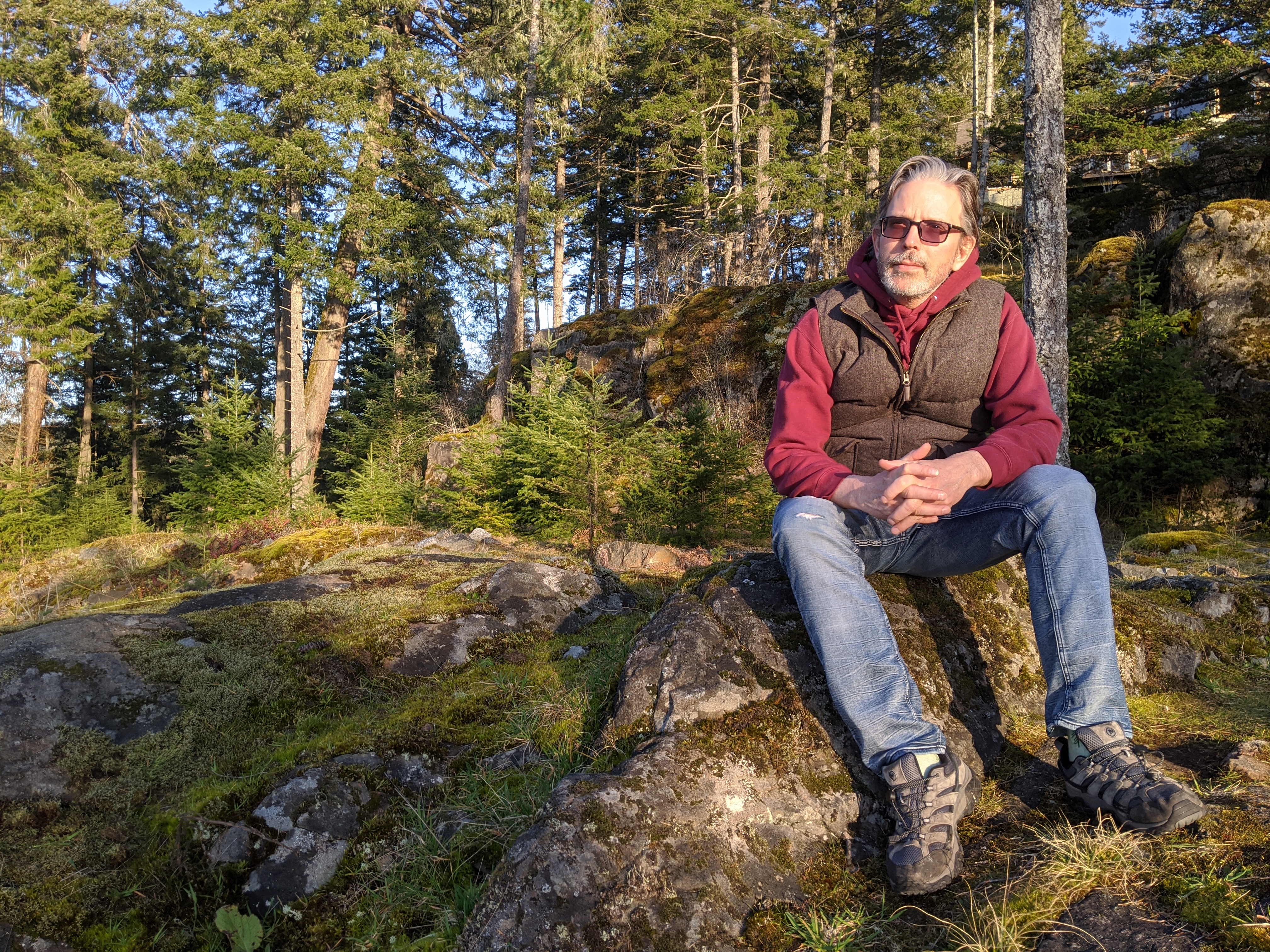
How long is the door open?
The Clean Fuel Regulations mandate carbon intensity reductions through 2030, with annual targets that tighten each year (SOR/2022-140, Schedule 1). Credit banking provisions allow credits generated now to be used for future compliance — creating demand that extends beyond 2030. The compliance ceiling (CCM trigger price) was $319 in 2024 and is indexed upward annually. The Sustainable Canadian Agricultural Partnership (SCAP) funds provincial digester cost-share programmes through March 31, 2028. A successor framework is in development. British Columbia's Low Carbon Fuel Standard has operated since 2013 with no legislated sunset. Alberta's Technology Innovation and Emissions Reduction (TIER) market has operated continuously since 2007. The federal draft Reducing Manure Methane Emissions offset protocol, when finalised, will create an additional crediting pathway beyond the CFR. No federal party has proposed repealing the industrial compliance mechanisms that drive credit demand.
Get notified when we begin onboarding farms in your province.
Market Data
The Carbon Credit Market — Right Now
Current Credit Price
$375/t
CFR CC2 spot price, Q4 2025
Source: ClearBlue Markets / ECCC
Compliance Ceiling
$319/t
2024 CCM trigger price. Increases annually with CI reduction schedule.
Structural Deficit
4.35M
12.3M credits required vs 7.95M generated in first 18 months. Demand exceeds supply.
RNG Price (BC)
$9.23/GJ
FortisBC voluntary RNG rate, January 2026. 4–12× conventional gas price.
Credit Price Trajectory
Source: ECCC Quarterly Credit Market Reports. Data updated quarterly. The compliance ceiling increases every year by law — credit demand is legislated, not voluntary.
Last updated: April 2026
Market Opportunity
~19,000 Target Farms Across Canada[13]
Hover over any province to see the breakdown by livestock type, viable farm count, and ACC expansion timeline.
Regulatory Status
Where the Rules Stand — April 2026
Anderson Carbon Capture operates under multiple federal and provincial regulatory frameworks. We believe in full transparency about where these programmes stand.
The Clean Fuel Regulations (CFR): Active federal law since July 1, 2023. Administered by Environment and Climate Change Canada. Requires fuel producers to reduce the lifecycle carbon intensity of gasoline and diesel. Credits are generated through registered pathways, including renewable natural gas from agricultural methane capture. This is ACC's primary crediting mechanism. The pathway is active, open, and accepting registrations.
Federal Offset Protocol — Reducing Manure Methane Emissions: Currently in draft. The protocol was posted for public comment and closed April 29, 2025. When finalised, this will create an additional crediting pathway specifically for manure methane reduction projects under the federal GHG Offset Credit System. ACC will utilise this pathway when it becomes available. It is not yet available.
Provincial Programmes: British Columbia's Low Carbon Fuel Standard allows credit stacking with the federal CFR on the same tonne of avoided emissions — the “double-dip” that makes BC the highest-value jurisdiction. Ontario, Alberta, Manitoba, and Saskatchewan each have provincial cost-share programmes for digester capital costs under the Sustainable Canadian Agricultural Partnership (SCAP), open until March 31, 2028. Alberta operates its own compliance offset market under TIER with established biogas protocols.
Grant Programmes: The federal Agricultural Clean Technology Adoption Stream closed March 31, 2026. The ACT Research and Innovation Stream remains open until March 31, 2028. Provincial cost-share programmes under SCAP remain open. A successor federal framework is in development but has not been announced. ACC's financial model does not depend on its existence.
We update this section when regulations change. Last updated: April 2026.
Working Farm Questions
Questions from Real Operations
These questions came from dairy and livestock operations across Ontario. If your farm raises questions like these, you're exactly who we built this for.
My herd is on sand bedding. Can the digester handle that?
Sand is the most common digester compatibility issue in Ontario dairy. It settles in the tank, abrades pumps, and reduces effective volume. A standard digester will struggle with sand-laden manure without a pre-separation system upstream — a sand lane or settling basin costing $40,000–$80,000 installed. But here's what most sand-bedding farmers don't realise until we run the numbers: switching to straw or shavings before installation often pays for itself immediately — because the digester produces your bedding at no additional cost. Separated fibre from the digestate replaces purchased bedding material. Ontario operations running organic bedding with a digester typically save $40,000–$60,000 per year in bedding costs alone. That's a saving you collect on top of the carbon credit revenue, not instead of it. The audit will model both paths and show you which one puts more money in your pocket.
Does adding a digester trigger a change to my Nutrient Management Plan?
Yes. In Ontario, installing an anaerobic digester constitutes a material change to your manure storage and handling system. You will need an updated Nutrient Management Strategy or Plan, engineered drawings for the building permit, and OMAFRA approval. The good news: digestate is a superior fertiliser product with more predictable nutrient content than raw manure, so the updated NMP often shows improved nutrient management — which OMAFRA likes. ACC coordinates the NMP update and the municipal building permit application. The engineering is subcontracted to a licensed Ontario engineer. This is included in the project management scope — you don't hire your own engineer.
My farm is 2 km from the nearest gas main. Who pays for the pipeline?
This is one of the most important questions in the feasibility audit. If your farm is within 500 metres of a high-pressure main, pipeline interconnection is typically $50,000–$150,000 and can be included in the project capital stack. At 2 km, the cost rises significantly. At that distance, on-farm utilisation — heating barns, drying grain, displacing propane — or compressed biogas trucking may be more economic than grid injection. The audit assesses this specific question for your farm. If grid injection doesn't pencil out, your annual payment from ACC is unaffected — credits come from methane capture, not from what happens to the gas afterward.
How much gas does the digester burn just to keep itself warm in an Ontario winter?
Parasitic heat load is real and it matters. A mesophilic digester operates at 35–40°C. In a sustained –25°C cold snap, the heating demand can consume 25–35% of the biogas produced. In milder months, parasitic load drops to 10–15%. The annual average for Southwestern Ontario is approximately 20–25%. The revenue estimates in our calculator account for this — what you see is what you'd actually sell or use, not the gross theoretical output. Biolectric's systems are designed for Northern European climates — Belgium, Netherlands, Scandinavia — which have comparable winter conditions to Ontario.
Can I bring in off-farm waste to boost gas production?
Co-digestion — adding food waste, fats, oils, grease, or other organic feedstocks alongside manure — can significantly increase biogas yield, sometimes doubling or tripling the output. However, receiving off-farm organic waste in Ontario requires registration or approval under the Nutrient Management Act and potentially O. Reg. 347. The carbon intensity score also changes. The feasibility audit will assess whether co-digestion makes sense for your operation. Your payment terms don't change regardless of feedstock mix.
If something breaks on a Sunday morning, who's coming to fix it?
ACC owns the equipment, so this is ACC's problem. Biolectric systems are remotely monitored — temperature, pressure, gas flow, pH — and most issues are detected before they become emergencies. As ACC's Ontario farm network grows past 15–20 active digesters, a full-time field technician based in Southwestern Ontario is the plan. Until then, the realistic answer is: remote diagnosis within hours, a technician on site within 24–48 hours for non-emergency issues, and an emergency call-out arrangement for critical failures. Your digester has redundant systems — if one pump fails, the system operates at reduced capacity until the repair.
What provinces do you serve?
All except Quebec. Ontario and BC are primary markets. BC farms earn roughly double because the provincial LCFS stacks with the federal programme.[15] Alberta, Saskatchewan, Manitoba, and Atlantic provinces are served on an expanding schedule.
If ACC sells the credits, can I still claim Net Zero for the DFC?
No. When carbon credits are sold to an obligated party, the environmental attribute transfers to them. You cannot then claim that same reduction toward your own farm's sustainability metrics. However, ACC can model a programme where some credits are retired on your behalf instead of sold. The honest answer is that most farmers will take the payment because $0 per year is worth more to their operation than a sustainability badge. But if Net Zero certification matters to your brand or your processor relationship, we can structure a programme that balances your payment with retained environmental claims.
Get Started
Call Us.
Over coffee. No bullshit. ☕
The audit is free. We come to your farm, walk your operation, and show you exactly what your manure can produce and what you can earn. No charge, no obligation.
But Anderson Carbon Capture wants you to be an owner. We want you to look at that digester and think: not only do I own a slice of that, but my neighbours' as well. We are not a co-op — we just want our farmers to look after the equipment like they own it. And for that, we award each farm one Class B, non-voting share in Anderson Carbon Capture. Every year, a portion of the profits are designated for our farmer partners.
The share is $2,500. That is the commitment. It isn't free exactly, but it is a damn good investment, we think.
No obligation. No cost. No risk. Tell us about your farm and our team will be in touch within 48 hours.
Anderson Carbon Capture is in pre-launch development. No securities are currently being offered. No fees are currently being collected. The information on this site is for educational purposes and represents the founder's business plan, not a binding offer.
Sources & References
- Statistics Canada & ECCC. Census of Agriculture 2021; National Inventory Report 1990–2022, Part 2 — Agriculture (Table A6-2). Fewer than 140 on-farm digesters; 99.77% of agricultural methane uncaptured. statcan.gc.ca · ECCC NIR
- Government of Canada. Clean Fuel Regulations, SOR/2022-140. Canada Gazette, Part II, Vol. 156, No. 14. laws-lois.justice.gc.ca
- Natural Resources Canada. GHGenius — A Model for Lifecycle Assessment of Transportation Fuels, Version 6. ghgenius.ca
- Environment & Climate Change Canada. Fuel Life Cycle Assessment Model (Fuel LCA Model). canada.ca
- Agriculture & Agri-Food Canada. Agricultural Clean Technology Program. The Adoption Stream closed March 31, 2026; the Research & Innovation Stream remains open until March 2028. Provincial cost-share programmes under SCAP remain available. agriculture.canada.ca
- Environment & Climate Change Canada. Clean Fuel Regulations Credit and Tracking System (CFR-CATS). canada.ca
- IPCC & ECCC. IPCC 2019 Refinement, Vol. 4 Ch. 10; ECCC National Inventory Report Annex 3. A 100-cow dairy on lagoon storage produces approximately 798 tonnes CO₂e/year in avoidable methane. IPCC
- ECCC & ClearBlue Markets. ECCC Clean Fuel Regulations Credit Market Report 2023; ClearBlue Markets Canadian Carbon Credit Forecast. Structural credit deficit and pricing above $400/tonne for compliance-grade credits. clearblue.com
- Environmental Finance & ClearBlue Markets. Forward pricing for CFR credits above $350/tonne in 2024–2025 market analysis. environmental-finance.com
- FortisBC & Enbridge. Renewable Natural Gas programs: RNG purchase prices 4–12× conventional natural gas spot. fortisbc.com
- Ontario Ministry of Agriculture, Food & Rural Affairs; University of Guelph. On-farm anaerobic digestion — economic analysis of byproduct savings: bedding replacement, digestate fertiliser value, and process heat recovery totalling $75,000–$100,000/yr for a 200-cow dairy. ontario.ca
- Farm Credit Canada. Equipment and infrastructure financing for Canadian agricultural operations. fcc-fac.ca
- Statistics Canada. Census of Agriculture 2021, Table 32-10-0425-01. Approximately 19,000 livestock farms in Canada (excl. Quebec) meet minimum herd-size thresholds for viable digester economics. statcan.gc.ca
- Canadian Dairy Commission & Statistics Canada. Number of dairy farms in Canada: 9,256 (2022). dairyinfo.gc.ca
- Government of British Columbia. Low Carbon Fuel Standard — Renewable & Low Carbon Fuel Requirements Regulation. BC LCFS credits can be stacked on top of federal CFR credits for BC-based projects. gov.bc.ca
- U.S. EPA AgSTAR Program; Journal of Environmental Management. Anaerobic digestion reduces odour emissions by approximately 90% compared to open-lagoon manure storage. epa.gov/agstar